
Would You Still Be Seen as a Leader If You Lost Your Title Tomorrow?

Imagine waking up tomorrow, and your title—CEO, Director, Manager—is gone. No executive privileges, no corner office, no authority given by a corporate structure. Just you.
Now ask yourself: Would people still follow you? Would they still respect you? Would they still see you as a leader?
If the answer isn’t an immediate yes, then you were never leading—you were just in charge.
The Halo and Horn Effect: The Bias You Don’t See—But Your Team Does

Your gut instinct isn’t always as sharp as you think. In fact, it might be sabotaging your leadership. Two silent killers—the halo effect and the horn effect—are probably distorting your judgment more than you realize.
Organizational Cultural Intelligence : A Leader’s Guide to Strategic Adaptation

When we talk about leadership success—especially for rising executives—the conversation often centers on performance, innovation, or strategic decision-making. But there’s a deeper force at play that quietly shapes careers and either propels or derails leadership potential: organizational culture.
Here’s the reality: You don’t just lead people. You lead within a culture. And if you don’t understand that culture—or worse, if you misinterpret or resist it blindly—you’re operating at a significant disadvantage.
For new leaders and high-potential professionals, adapting to workplace culture isn’t just helpful—it’s mission-critical. But what happens when the culture itself is unhealthy? What if the very behaviors that earn praise and promotions are rooted in dysfunction?
The Invisible Saboteur: How Subtle Self-Doubt is Blocking Your Breakthrough

We all have that voice.
You know the one—quiet but relentless, whispering you’re not good enough, you’ll fail again, why even try?
It’s the quiet voice inside—the one that doubts, criticizes, and catastrophizes. The one you’ve listened to for so long, you’ve started calling it truth.
But here’s the uncomfortable, unspoken reality:
Your negative mindset may be the very thing keeping you from the life you’re capable of living.
Unmasking Imposter Syndrome: Breaking the Cycle of Self-Doubt

You’ve put in the work. You’ve earned your place. So why does that voice still whisper, Was it luck? Right place, right time? What if they realize I don’t belong?
This isn’t humility. It’s the quiet force that keeps you questioning yourself. Imposter Syndrome steals your confidence, fuels overwork and convinces you that you need to keep proving your worth—again and again.
And here’s the hard truth: It doesn’t disappear with success. It grows.
The higher you climb, the more pressure you feel to live up to expectations. Even icons like Maya Angelou and Albert Einstein battled these same doubts. If they struggled, why would you be any different?
The Power of Doing Nothing: Why Downtime Fuels Success

In a world that glorifies hustle culture, busyness is often mistaken for progress. We’re told to grind, push harder, and maximize every second—without stopping to ask if we’re even moving in the right direction. But here’s an unfiltered truth: success isn’t about working harder; it’s about resting smarter. Nonstop hustle without reflection is like running on a treadmill—exhausting but getting nowhere. Waking up at 4 AM and outworking everyone may sound productive, but what good is grinding if you’re grinding yourself into the ground?
Awakened Leadership: The Power of Self-Awareness
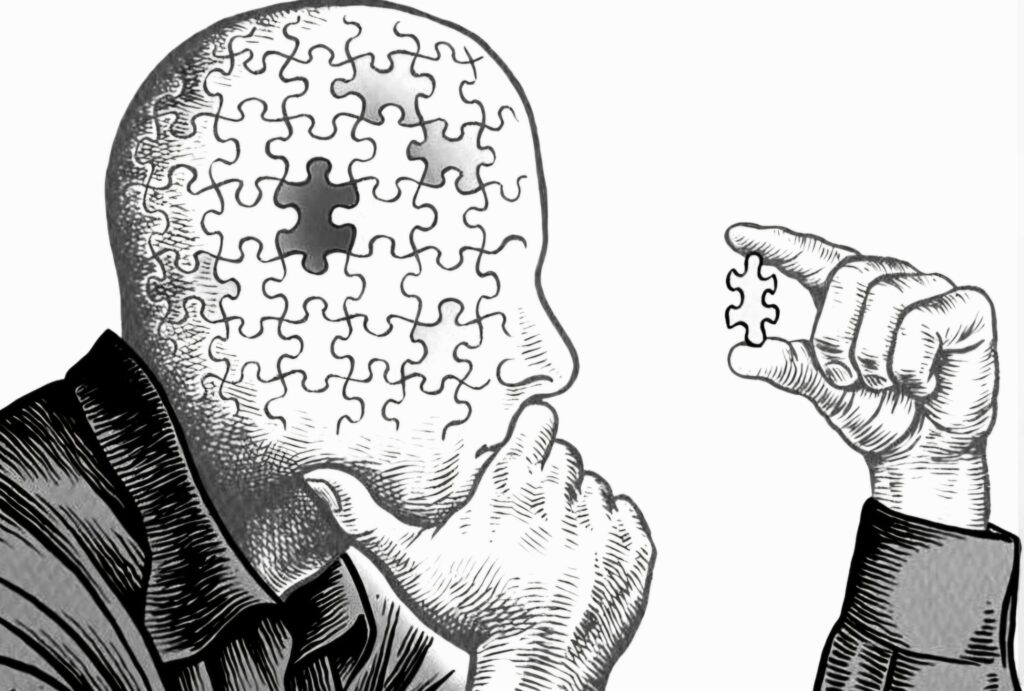
Leadership isn’t about titles, power, or charisma. It’s about influence. And the foundation of influence? Self-awareness.
But here’s the problem: most people avoid true self-awareness because it’s uncomfortable. They’d rather focus on external factors—strategies, skills, and other people’s flaws—than turn the mirror on themselves.
The uncomfortable truth? If you’re struggling as a leader (or in life), the problem isn’t out there, It’s YOU.
Filtered Truths, Polished Reports: Why C-Suite Leaders Rarely Hear the Full Truth

Leadership at the highest level isn’t about making easy decisions—it’s about making the right ones. But here’s the uncomfortable truth: you’re only as effective as the information you receive.
And in the C-suite, that information is almost always filtered, softened, or incomplete.
Unreported issues never make it into official documents.
Operational breakdowns get buried under polished KPIs.
Employee frustrations disappear before they ever reach leadership.
Resilience Check: Do You Have What It Takes to Lead Under Pressure?

The leadership landscape has changed. The past few years have tested every executive’s ability to pivot, adapt, and lead through uncertainty. The most effective leaders aren’t the ones who had all the answers—they’re the ones who had the mental agility to pivot, the emotional intelligence to lead with empathy, and the resilience to keep going despite setbacks.
In an unpredictable world, resilience is no longer optional—it’s the defining trait of high-impact leaders.
The question is: Do you have what it takes to lead under pressure?
Leading the New Workforce: Thriving in an Era of Job Hopping Over Longevity

For decades, corporate leadership operated on a simple formula: hire great people, keep them for 30 years, and reward their loyalty with a pension and a plaque. Employees showed up, did their jobs, and retired in the same role they started in.
That world is gone.
This isn’t a “Millennial job-hopping problem.” It’s a fundamental shift in how work is valued. Employees today don’t stay out of obligation—they stay if they see opportunity, purpose, and growth. And if they don’t, they leave.